How to Build a Talking C-3PO Head: A Modern Take on a Classic Droid
C-3PO remains one of cinema's most beloved droids, but his unique speech patterns and personality have long made accurate replicas a challenge. Thanks to advances in artificial intelligence, a build from Samuel Potozkin shows how a Raspberry Pi 5 can bring a convincing talking C-3PO head to life. While this isn’t a full body – just the head – it captures the essence of a conversational protocol droid.
What is the purpose of this C-3PO replica project?
The goal was to create a C-3PO head that you can actually talk to – something that would have amazed audiences in 1977. Instead of a full droid, the project focuses on the head because that's all that's needed for a convincing conversation. By combining modern speech-to-text, a large language model (LLM), text-to-speech synthesis, and a custom personality layer, the system lets you hold a real-time chat with the golden droid. It’s a proof-of-concept that moves beyond static replicas into interactive AI-driven robotics.
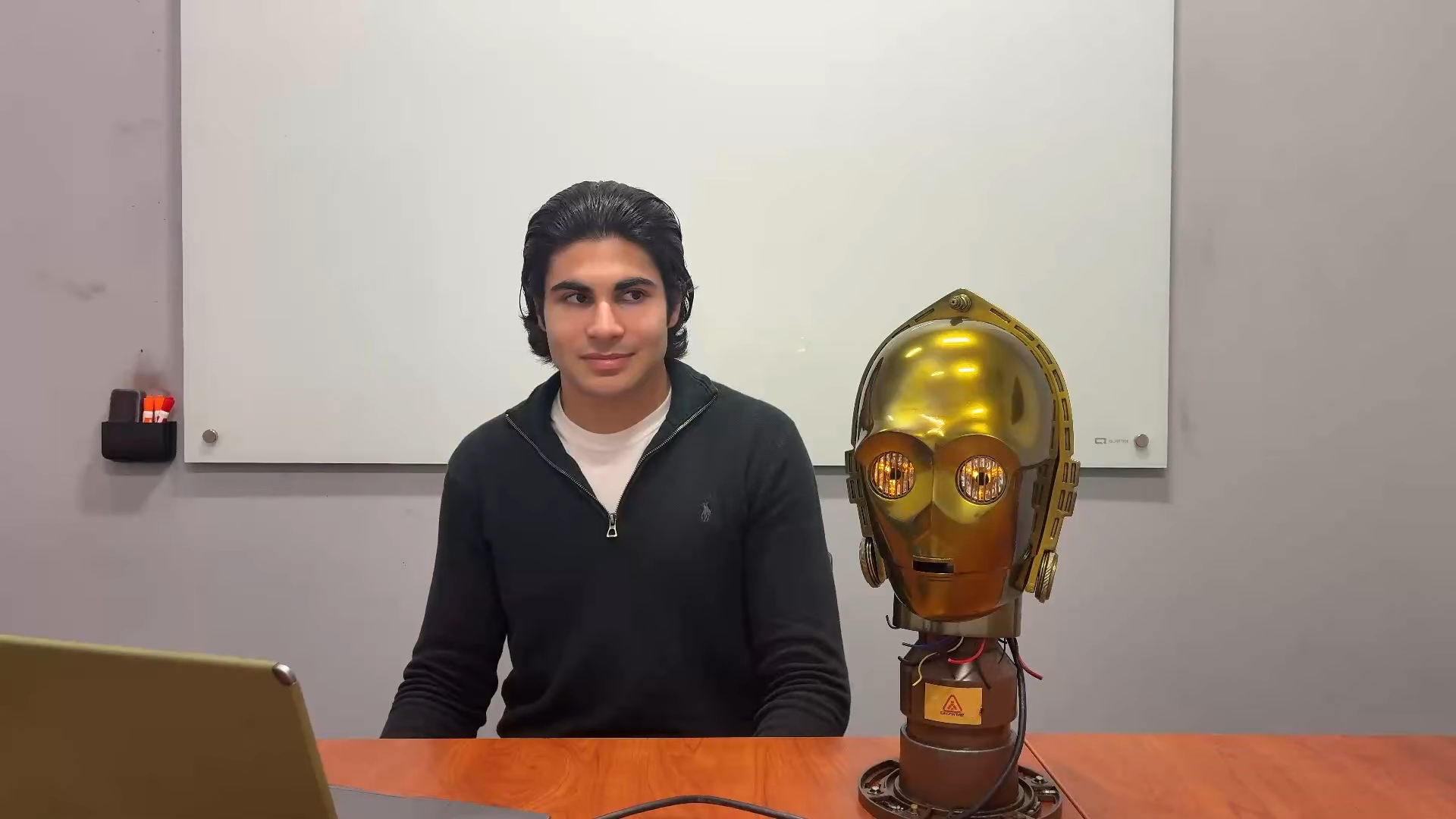
What hardware is used to power the droid's brain?
The entire system runs on a Raspberry Pi 5, which serves as the central computer. A microphone captures your voice, and a speaker plays back C-3PO’s responses. The Pi handles all processing – from listening to understanding to speaking – making it a compact yet powerful brain for a home-built droid. The build relies on off-the-shelf components and open-source software, keeping costs reasonable while delivering impressive functionality.
How does the software pipeline work to create a conversational C-3PO?
The process flows through several stages. First, a real-time speech-to-text engine converts your spoken words into text. That text is then sent to a large language model (the same type of AI behind modern chatbots), which interprets the question or comment and generates an appropriate response. Next, a processing layer adds C-3PO’s characteristic tone, politeness, and slightly formal wording. Finally, a text-to-speech synthesizer speaks the reply in an imitation of Anthony Daniels’ iconic voice. The result is a back-and-forth conversation that feels like talking to the movie character – albeit with some delays.
How does the system replicate C-3PO's distinctive voice and mannerisms?
The voice synthesis is a highlight: the text-to-speech engine is tuned to mimic the droid’s high-pitched, slightly fussy delivery. The personality layer modifies the LLM’s raw output to sound more like C-3PO – adding phrases like “Oh my!” or “I do beg your pardon” and avoiding modern slang. However, the build’s creator notes it’s not perfect; the pacing can be slow and the conversational flow a bit “robotic,” which is ironic since the movie character was supposed to be smooth-talking. Still, for a DIY project, the voice and mannerisms are remarkably close.
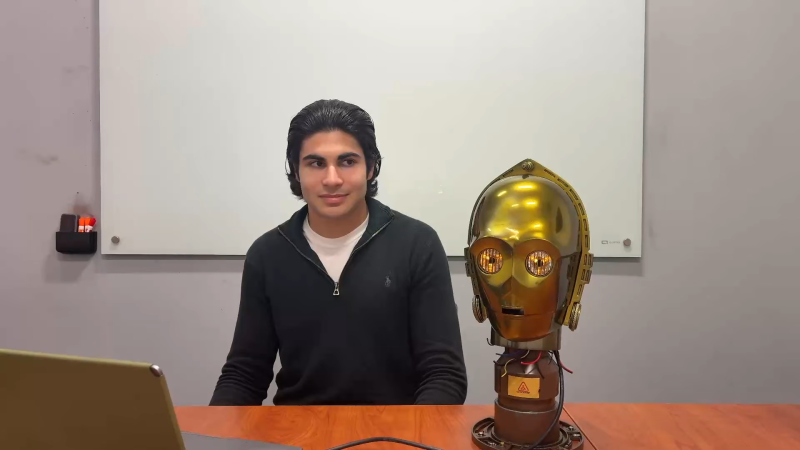
What are the limitations of this build compared to the movie character?
The replica has a few notable shortcomings. The response time is slower than the film's C-3PO – expect pauses of several seconds. The conversation also lacks the natural banter and quick wit of the original; the AI may produce correct answers but misses the layered personality. The voice, while similar, doesn’t perfectly capture Daniels’ inflections. And of course, it’s only a head – no walking, arm-waving, or gold leg movement. That said, these limitations are minor given the technology available to a hobbyist, and the project shows immense promise for future iterations.
Where can you find the build plans and source code?
Samuel Potozkin has generously shared his work. You can download the in-depth materials and code from Google Drive and the full source on GitHub. These include schematics, software libraries, and configuration files to get your own C-3PO head talking. For those interested in other classic droid replicas, we’ve covered more traditional builds as well. Check out the video below for a demonstration.
Related Articles
- 7 Essential Steps to Launch a Successful Personalization Initiative
- Einride Brings Level 4 Autonomous Electric Trucks to Ohio: Key Questions Answered
- ClawRunr: An Open-Source Java AI Agent for Smarter Background Tasks
- Securing AI Agents in CI/CD: GitHub's Defense-in-Depth Strategy
- Mastering Browser Driver Management with WebDriverManager
- ClawRunr: The Open-Source Java AI Agent for Automated Tasks – Your Questions Answered
- WebDriverManager v6.3.3 Release Eliminates Browser Driver Hassles for Java Selenium Developers
- Founders warned: 'The business didn't need more of me, it needed a different me' – Why stepping aside can save a growing company