AI in Software Development: A Comprehensive Q&A
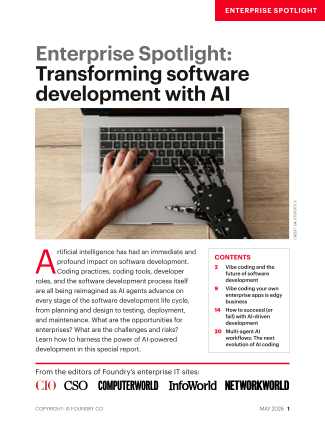
Artificial intelligence is revolutionizing software development, affecting everything from how code is written to how applications are tested and deployed. This Q&A explores the key changes AI brings to the development lifecycle, the tools and agents driving innovation, and what these shifts mean for developers and organizations.
1. How is AI transforming software development today?
AI is reshaping software development by automating repetitive tasks, enhancing code quality, and enabling faster iterations. Intelligent code assistants, such as GitHub Copilot, suggest code snippets and entire functions in real time, significantly boosting developer productivity. AI also powers advanced debugging tools that predict errors and recommend fixes before compilation. Beyond coding, machine learning models analyze historical project data to improve planning and estimation, reducing delays and budget overruns. The impact is immediate: teams can deliver features faster with fewer bugs, while developers focus on higher-level design and problem-solving. This transformation is not just about tools—it also redefines roles, as developers become orchestrators of AI agents rather than just coders.

2. What specific stages of the software development lifecycle (SDLC) are being affected by AI?
AI touches every phase of the SDLC. In planning, AI analyzes past project data to estimate timelines and identify risks. During design, generative AI creates architectural diagrams and prototypes from natural language descriptions. In coding, AI-powered autocompletion and code generation speed up development. Testing benefits from AI that automatically generates test cases, identifies edge cases, and runs regression suites. For deployment, AI monitors system performance and automatic rollbacks if anomalies are detected. Finally, maintenance uses predictive analytics to flag potential failures and suggest patches. Each stage sees efficiency gains, but the most profound changes are in coding and testing, where AI agents reduce manual effort by up to 40% in some studies.
3. How are AI agents changing the role of developers?
The rise of AI agents is shifting developers from writing every line of code to guiding and reviewing AI-generated output. Developers now focus on prompt engineering—crafting precise instructions for AI models—and validating code for correctness, security, and performance. This change demands new skills: understanding AI limitations, debugging generated code, and integrating multiple AI agents into workflows. Rather than replacing developers, AI augments their capabilities, allowing them to tackle more complex problems. For example, a junior developer can use an AI assistant to produce production-quality code, while senior developers spend more time on architecture and mentoring. The role evolves into that of a “AI supervisor” who ensures the agent’s output aligns with business goals and best practices.
4. What are the key AI-powered tools for coding available today?
Several AI tools have become essential in modern development. GitHub Copilot suggests code in real time within popular IDEs like VS Code. Tabnine offers AI completions that learn from a team’s codebase. Amazon CodeWhisperer provides code recommendations with security scanning built in. For testing, Testim.io and Functionize use AI to create and maintain test suites. DeepCode (acquired by Snyk) reviews code for vulnerabilities using AI. Also, ChatGPT and Claude assist with debugging, documentation, and explanation of complex algorithms. Each tool integrates differently but all aim to reduce time spent on boilerplate and error-prone tasks, letting developers concentrate on logic and creativity.
5. How does AI improve testing and deployment processes?
In testing, AI automates test case generation by analyzing code changes and user behavior patterns, ensuring comprehensive coverage. It can prioritize test suites based on risk, running only the most relevant tests for each build. During deployment, AI monitors metrics like response time, error rates, and traffic, enabling canary releases and automated rollbacks if performance degrades. Machine learning models predict system load and scale resources proactively, preventing outages. AI also assists in A/B testing by automatically analyzing results and suggesting the best variant. These capabilities reduce manual oversight, accelerate release cycles, and improve reliability, allowing teams to deploy multiple times a day with confidence.
6. What challenges come with integrating AI into software development?
While AI offers many benefits, challenges include code quality and security risks—AI models can generate insecure or inefficient code if not properly supervised. Bias in training data can lead to flawed suggestions, especially in niche domains. Overreliance on AI may erode developers’ debugging and problem-solving skills. Additionally, tool integration can be complex, requiring teams to adapt existing workflows. Cost is another factor: premium AI tools and the compute resources they require can strain budgets. Finally, legal and licensing concerns around AI-generated code ownership remain unresolved. Organizations must address these issues through training, code reviews, and clear policies to harness AI safely and effectively.
7. What does the future hold for AI in software engineering?
The future points toward autonomous AI agents that can manage entire microservices or even complete software projects with minimal human intervention. We’ll see AI that understands business logic and user intent, generating full applications from high-level specifications. Natural language programming may become common, where developers “talk” to AI to build features. However, human oversight will remain critical for ethical decisions, creativity, and complex system design. AI will also enable personalized learning tools for developers, continuously upskilling teams. The role of the developer will evolve into that of an architect and strategist, orchestrating AIs across the entire SDLC. The transformation is just beginning, with profound implications for productivity, innovation, and the democratization of software creation.
Related Articles
- Swift Expands IDE Ecosystem: Now Available on Open VSX and Agentic IDEs
- Samsung Tops Apple in ACSI Customer Satisfaction Rankings for 2026
- Introducing the Block Protocol: A Universal Standard for Web Blocks
- Breaking: Planet Argon Opens 2026 Rails Developer Survey – Critical Insights for Community Growth
- How Visual Studio Code Outshines Dedicated Productivity Apps: A Q&A Breakdown
- Command Line Defies Predictions of Obsolescence, Remains Critical Tool for Professionals
- Supercharge Your Python Development with Codex CLI: A Terminal-Based AI Assistant
- The Evolution of Attraction in Resident Evil: From Leon to Lady Dimitrescu