Smarter Advertising Through Multi-Agent Systems: A Structural Fix
Introduction
In the evolving landscape of digital advertising, many companies rush to label every innovation as an “AI feature.” However, some teams take a more deliberate path—focusing on solving structural challenges first. Spotify Engineering recently shared how their journey toward smarter advertising began not with a flashy AI launch, but with a deep examination of underlying architectural problems. The result: a multi-agent architecture that fundamentally rethinks how ad decisions are made.
The Problem: Structural Complexity
Traditional ad systems often rely on monolithic decision engines that attempt to optimize for everything at once. This leads to bottlenecks, conflicting objectives, and a lack of transparency. Spotify’s team realized that the real issue wasn’t a lack of AI—it was a lack of modularity. Each stage of ad delivery—targeting, bidding, creative selection, and frequency capping—has unique requirements that are hard to handle in a single model.
Beyond a Single Model
The original approach tried to train one massive model to predict the best ad for every situation. This created a monolithic system that was difficult to update, test, or explain. Engineers found themselves repeatedly patching the model for edge cases, leading to a fragile architecture.
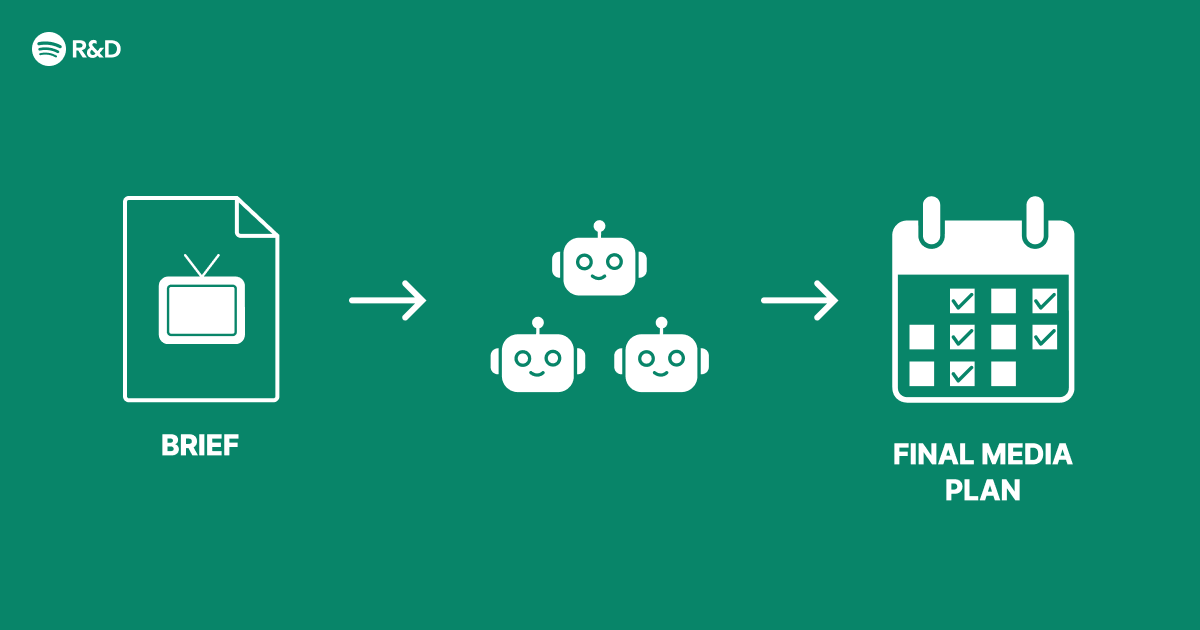
Instead of continuing down that path, the team pivoted to a multi-agent system: a collection of specialized agents, each responsible for a specific subproblem. This design mirrors how human teams operate—with experts handling distinct tasks and collaborating to reach a superior outcome.
The Multi-Agent Solution
Each agent in the architecture focuses on one dimension of the advertising decision:
- Targeting Agent: Identifies relevant audience segments based on past behavior and real-time signals.
- Bidding Agent: Determines the optimal bid price for each impression, balancing cost and expected value.
- Creative Agent: Selects the best ad creative (image, copy, call-to-action) for the context.
- Frequency Agent: Ensures users aren’t overwhelmed by the same ad, managing exposure limits.
These agents communicate through a lightweight message bus, exchanging scores and constraints rather than raw data. This keeps each agent’s internal model private and allows independent updates.
Coordination Without Conflict
One key insight was that agents should negotiate rather than vote. Instead of a single aggregator that averages outputs, the system uses a priority-based auction among agents. For example, the Frequency Agent can veto a placement if the user has seen too many ads, overriding the Bidding Agent’s recommendation. This hierarchical structure ensures that global constraints (like user experience) are never sacrificed for local optima.
Implementation Details
The architecture was built on Spotify’s existing infrastructure using containerized microservices. Each agent runs as a separate service with its own API and database. Communication happens via asynchronous message queues, allowing agents to scale independently. For real-time decision-making, the system uses a lightweight orchestrator that coordinates the flow:

- Request arrives: The orchestrator sends a context (user, device, time, etc.) to all agents.
- Agents respond: Each returns a structured response with scores, bids, or recommendations.
- Orchestrator resolves: Applies priority rules and returns the final ad choice.
This design makes it easy to add new agents (e.g., a Brand Safety Agent or Seasonality Agent) without touching existing code. The team also implemented shadow testing: new agents run in parallel with live agents, logging their decisions without affecting output. This allows safe experimentation.
Results and Lessons
While specific metrics were not disclosed, the team observed significant improvements in ad relevance and user satisfaction. By separating concerns, they reduced the complexity of each model, making them easier to train and debug. The modularity also sped up deployment—new agent versions could be rolled out individually, reducing risk.
Key Takeaway
The real innovation wasn’t a new AI algorithm; it was a structural reorganization of the decision-making process. By treating advertising as a multi-agent problem, Spotify Engineering created a system that is more transparent, adaptable, and scalable. As they noted, “We weren’t trying to ship an AI feature. We were trying to fix a structural problem.”
Future Directions
The architecture opens the door to advanced features like reinforcement learning for agents and collaborative negotiation using game theory. The team is also exploring how to make agents learn from each other without sharing sensitive data, using techniques like federated learning.
For advertisers, this means more efficient campaigns. For users, it means ads that feel less intrusive and more relevant. And for engineers, it offers a blueprint for building AI systems that are not black boxes but organized teams of specialists.
This article is based on insights originally shared on the Spotify Engineering blog.
Related Articles
- The One Feature Your TV is Missing: Wide Viewing Angles Explained
- Pixel 11 Leaks: Hopes and Hidden Worries
- How to Foster Amiability in Online Communities: Lessons from the Vienna Circle
- Navigating the Age Verification Minefield: A Guide to Understanding California's Social Media Ban Debate
- One Tennessee Farmer Stands Ground Against Power Giant, Halting AI Data Center Power Line
- Facebook Transforms Groups Search with Hybrid AI to Unlock Community Knowledge
- New Software Supply Chain Attack Leverages Sleeper Packages for Credential Theft and Pipeline Exploitation
- Breaking: Google Pixel Owners Urged to Activate Life-Saving Emergency Tools