10 Key Insights for Reviving the American Dream in 2025
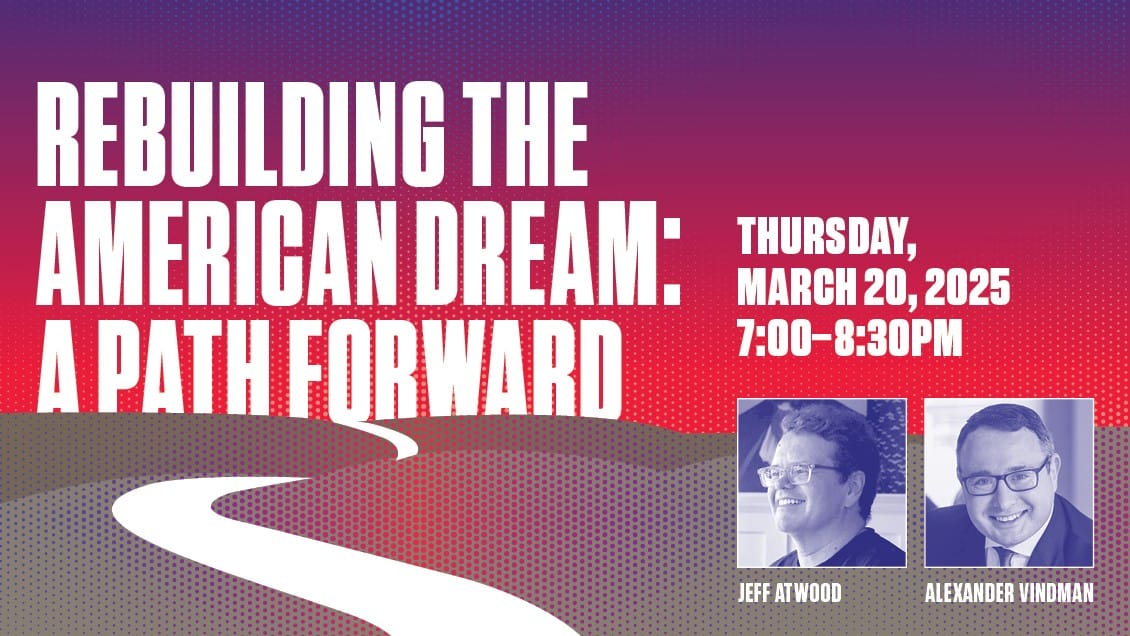
The American Dream has always been more than a cliché – it's a living promise. But as we navigate the challenges of 2025, that promise feels fragile and uncertain. In a recent thought-provoking talk at the historic Cooper Union, tech entrepreneur Jeff Atwood and former U.S. Army officer Alexander Vindman came together to dissect what it truly means to keep the American Dream alive. Their conversation, rooted in personal sacrifice, community building, and systemic change, offers a powerful blueprint for action. Here are ten critical takeaways from their discussion, each shedding light on how we can renew the Dream for everyone.
1. The American Dream Is Still a Promise – Not a Guarantee
The core of the American Dream is the belief that hard work, fairness, and opportunity can lead to a better life. But in 2025, that belief is being tested. Economic inequality, political division, and cultural cynicism have eroded trust in the system. Jeff and Alexander argue that the Dream isn't dead – it's just incomplete. To revive it, we must actively work to ensure that the promise applies to all, not just a few. This means confronting uncomfortable truths about where we've been and where we want to go. The Dream requires constant nurturing, not passive acceptance.
2. Civic Courage Is the Bedrock of Democracy
Alexander Vindman's story is a testament to the power of civic courage. Born in the Soviet Union, he immigrated to Brooklyn, enlisted in the Army, earned a Purple Heart, and rose to become Director of European Affairs on the National Security Council. When faced with a choice between looking the other way and upholding his oath, he chose integrity – a decision that cost him his career but never his honor. His example shows that defending democratic ideals often requires personal sacrifice. True citizenship means being willing to stand up for what's right, even when it's hard.
3. Community Building Is a Skill We Can Learn
Jeff Atwood spent years building online communities like Stack Overflow and Discourse. He learned that whether you're running a country or a forum, the same principles apply: clear expectations, fair systems, strong boundaries, and a shared sense of purpose. These elements create spaces where people can participate constructively and where collective wisdom thrives. The same principles can strengthen physical communities – from neighborhoods to nations. We don't have to guess; we can apply proven methods to foster trust and collaboration.
4. Democracy and Economic Mobility Are Inseparable
Without a healthy democracy, economic mobility falters. The American Dream depends on fair rules and equal access to opportunity. When political systems are corrupted by money or power, the ladder of success becomes harder to climb. Jeff and Alexander emphasize that defending democratic institutions – like voting rights, free press, and an independent judiciary – is not a separate fight from economic justice. They are two sides of the same coin. Strengthening democracy creates the conditions for people to rise through hard work.
5. Move Beyond Individual Generosity to Systemic Change
Charity is important, but it's not enough. Jeff argues that we need to shift from individual acts of generosity to systems that create security, dignity, and possibility for all. Think of a local park – it's a shared resource that benefits everyone, not just those who donate. Similarly, policies like universal healthcare, affordable education, and fair wages build a foundation for the Dream to flourish. Systemic change is complex, but focusing on foundational reforms can unlock opportunity for millions.
6. Digital Spaces Can Be a Training Ground for Civic Life
The internet has often been a source of division, but it doesn't have to be. Jeff's work shows that well-designed digital communities can encourage constructive discourse and participatory governance. When people have clear rules, transparent moderation, and a stake in the outcome, they behave more responsibly. These same techniques can inform how we run real-world institutions. We can use technology to build bridges, not walls, and to create spaces where the common good is prioritized.

7. Shared Purpose Unites Diverse Perspectives
Jeff and Alexander come from vastly different backgrounds – one a tech entrepreneur, the other a military officer. Yet they share a fierce belief that everyone's American Dream is worth fighting for. This common purpose allowed them to bridge their differences and find common ground. In a polarized society, identifying shared values – like fairness, opportunity, and community – can bring people together. It's not about erasing differences but about finding the threads that bind us.
8. The Cooper Union Talk Is a Model for Honest Conversation
The event at Cooper Union was not a podium for easy answers; it was a space for honest, unscripted dialogue. Jeff promised that the talk would confront hard truths about the state of the Dream and what it will take to rebuild it. This kind of open conversation is exactly what our society needs more of. By engaging with people who have different life experiences and perspectives, we can move beyond echo chambers and develop a more nuanced understanding of the challenges we face.
9. Learn from Those Who Have Sacrificed for Their Values
Alexander Vindman's career was cut short because he chose to uphold the values he swore to protect. His story is a profound lesson in sacrifice for civic duty. Jeff admits he has much to learn from Alex about what true integrity looks like. In times when the path of least resistance is tempting, we must remember that real leadership often requires putting something on the line. By studying such examples, we can cultivate the courage to act when it matters most.
10. The Dream Requires Active, Ongoing Effort
Staying gold – holding onto the best parts of ourselves and our communities – is not a one-time act. It takes constant work, vigilance, and action. Jeff ends his talk with a call to keep working on long-term structural change that creates opportunity for everyone. The American Dream is not a destination; it's a continuous process of building and rebuilding. Each of us has a role to play, whether through community involvement, political engagement, or simply having the hard conversations that move us forward.
The American Dream isn't something we inherit – it's something we create and recreate every day. By embracing civic courage, systemic thinking, and a shared commitment to fairness, we can breathe new life into this old promise. The conversation at Cooper Union was just the beginning. Now it's up to each of us to carry that conversation forward and turn insight into action.
Related Articles
- SUSE: Unifying AI, Containers, and VMs on an Open Infrastructure Platform
- Understanding HCP Terraform with Infragraph: Your Questions Answered
- AI Accuracy Under Scrutiny: 'Extrinsic Hallucinations' Pose New Challenge for Language Models
- How to Handle the Removal of Newtonsoft.Json from VSTest in .NET 11 and Visual Studio 18.8
- How to Supercharge Your Laptop with the Beelink EX Mate Pro USB4 v2 Dock
- Mastering the DJI Osmo 360: A Complete Guide to Immersive Action Filming
- Redox OS: April 2026 Update – Real Hardware Gains and More
- 10 Key Insights into the American Dream: A Guide to Building a Fair Future