Behind the Scenes: NASA's SpaceX CRS-34 Mission to the ISS
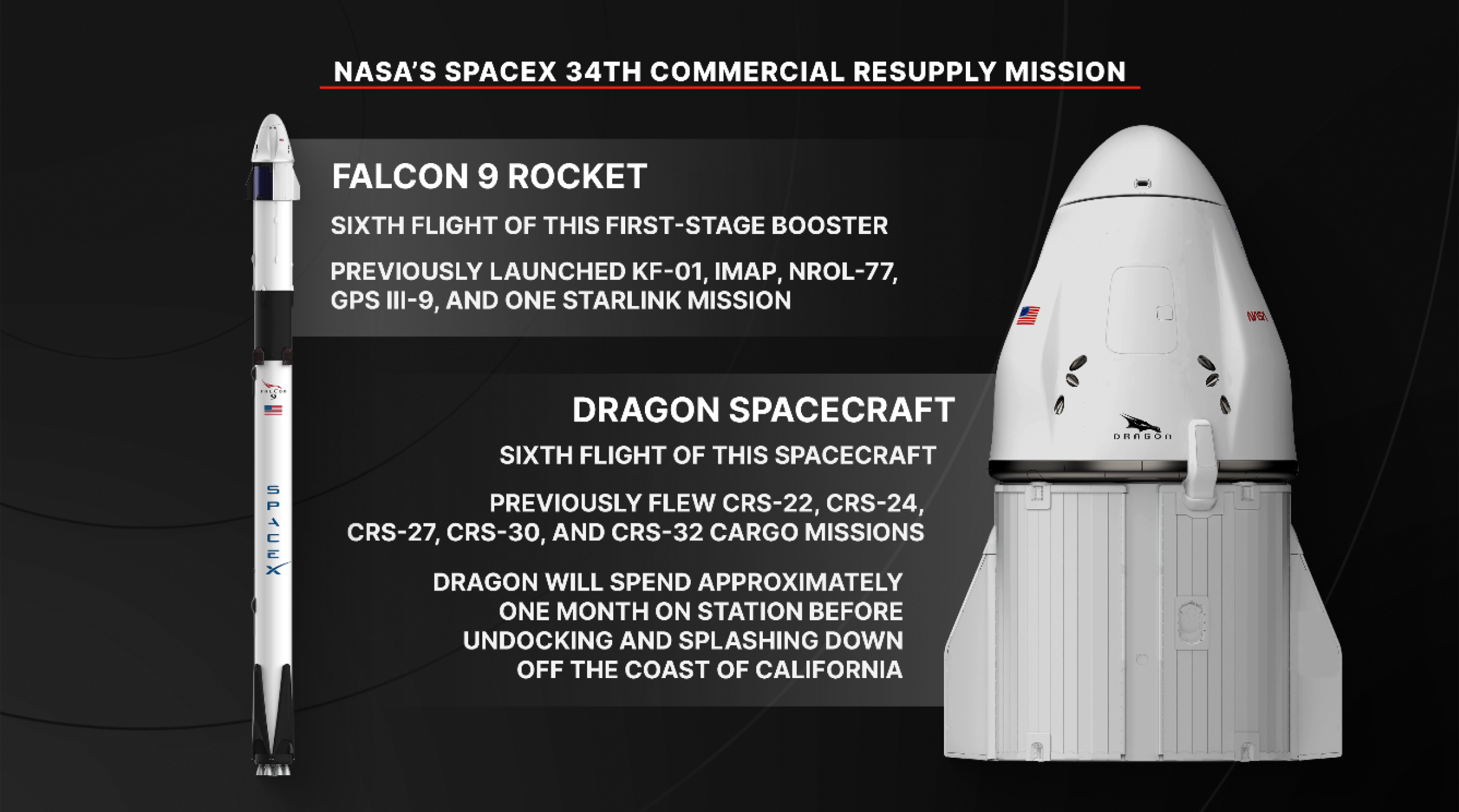
NASA and SpaceX are gearing up for the 34th commercial resupply mission to the International Space Station. Set to launch in mid-May from Cape Canaveral, the Falcon 9 rocket will carry a Dragon spacecraft packed with over 6,500 pounds of supplies and cutting-edge science experiments. Here's everything you need to know about this vital journey to the orbiting laboratory.
What is the 34th commercial resupply mission?
This mission, designated CRS-34, is part of NASA's ongoing partnership with SpaceX to deliver cargo to the International Space Station. It marks the 34th such flight under a commercial contract, using the company's proven Dragon spacecraft and Falcon 9 rocket. The primary goal is to ferry scientific investigations, crew supplies, and equipment to the ISS, supporting both daily operations and long-term research goals like the Artemis program and future Mars missions.
When and where will the launch take place?
Liftoff is scheduled for mid-May, with the exact date to be confirmed closer to launch. The Falcon 9 rocket will blast off from Launch Complex 40 at Cape Canaveral Space Force Station in Florida. This historic pad has hosted numerous SpaceX missions and offers a prime location for sending payloads to orbit. After launch, the Dragon spacecraft will autonomously navigate to the ISS.
What is the Dragon spacecraft carrying?
The Dragon is loaded with approximately 6,500 pounds of supplies. This includes standard crew provisions like food, clothing, and personal items, as well as critical hardware and spare parts. But the most exciting payloads are the scientific experiments, which will enable researchers on Earth to conduct studies in microgravity. The cargo also supports technology demonstrations that could benefit future space exploration.
How will Dragon dock with the space station?
After a carefully timed rendezvous, Dragon will autonomously approach the ISS and dock to the forward port of the Harmony module. Harmony is a key connecting node that provides access to multiple laboratory modules. The docking process is entirely computer-guided, though ground teams and station crew monitor every step. Once attached, the hatch will be opened, and the crew will begin unpacking the cargo within hours.
How can I watch the mission coverage?
NASA will provide live coverage of both the launch and docking events. You can tune in via NASA+, Amazon Prime, or NASA's YouTube channel. The agency also shares updates across social media platforms. To see the full schedule and access streams, visit the official NASA website or check their social feeds for the latest timings. Don't miss the chance to witness another step in human spaceflight.
Why is research on the ISS so important?
For over 25 years, the International Space Station has served as a unique laboratory where scientists from more than 110 countries have conducted over 4,000 experiments in microgravity. This research helps us understand fundamental physics, biology, and materials science in ways impossible on Earth. Crucially, it lays the groundwork for long-duration missions to the Moon under the Artemis program and eventually to Mars, while also yielding direct benefits to life on our planet.
What are the key science experiments on this mission?
Three standout investigations are flying on CRS-34. ODYSSEY will examine how accurate Earth-based microgravity simulators are by comparing bacterial behavior in space versus on Earth. STORIE monitors charged particles that respond to space weather and can disrupt power grids and satellites, helping improve prediction models. Laplace studies the movement and collisions of dust particles in microgravity, offering insights into Earth's formation and the origins of planets in our solar system and beyond.
Related Articles
- Amazon WorkSpaces Empowers AI Agents with Secure Desktop Access (Preview)
- 10 Key Takeaways from xAI's Recent Moves: A High-Profile Departure and a $60 Billion Deal
- From Period Drama to Hard Sci-Fi: A Guide to 'For All Mankind's Genre Evolution
- Decoding Reality: A Practical Guide to Bohmian Mechanics and Its Testable Predictions
- New Automated Method Pinpoints Root Causes of Failures in Multi-Agent AI Systems, Researchers Announce
- Spider-Man's New AI Companion Sparks Debate Among Fans Ahead of 'Brand New Day'
- The Science Behind Ghostly Encounters: How Infrasound Shapes Perceptions of Hauntings
- UX Research Adopts Hollywood Storytelling Techniques to Boost Stakeholder Engagement