Curiosity Rover's Close Call: How NASA Freed a Stubborn Rock from Its Drill
On Mars, even the most routine tasks can turn into nail-biting drama. In a recent episode, NASA's Curiosity rover found itself in a rocky bind—literally. A pebble became wedged in its drill, forcing mission engineers to spend nearly a week orchestrating a careful series of maneuvers to dislodge it. The event, captured in new footage, showcases the rover tilting, rotating, and vibrating its robotic arm in a delicate operation. Below, we break down the incident with answers to key questions.
- What exactly happened to Curiosity's robotic arm?
- How did the rock get stuck, and why did it take so long to remove?
- What techniques did NASA use to free the rock?
- What does the new footage reveal about the operation?
- Why is this rock-removal effort significant for the mission?
- What is the role of Curiosity's drill, and how does this incident affect future plans?
What exactly happened to Curiosity's robotic arm?
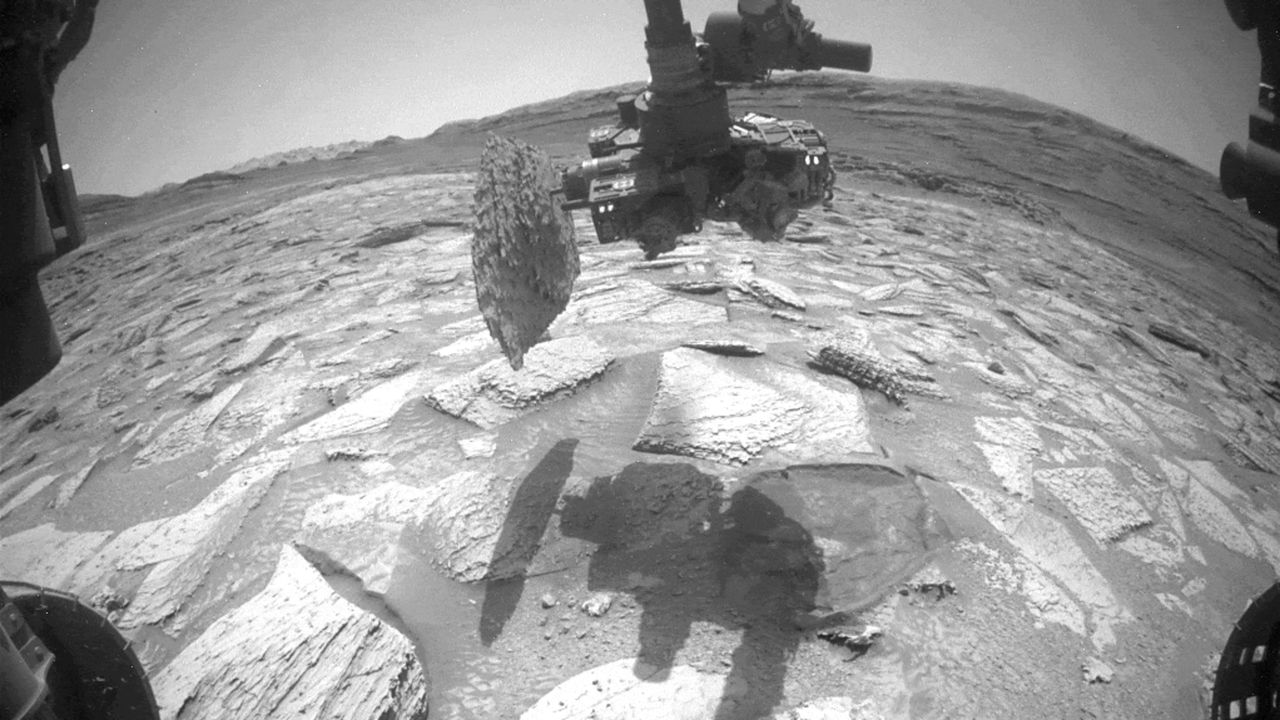
Curiosity's robotic arm, a complex tool for drilling and collecting rock samples, encountered an unexpected obstacle. A small rock became lodged in the drill's bit assembly, preventing it from functioning properly. For six days, the rover attempted to dislodge the intruder using a variety of movements, including tilting the arm at different angles, rotating its wrist, and even vibrating the drill mechanism. The incident was first noticed when the drill failed to retract after a sample collection attempt. Mission scientists at NASA's Jet Propulsion Laboratory monitored the situation closely, as any forceful action could risk damaging the arm. The rock's stubbornness highlighted the challenges of operating a robot millions of miles away, where even a tiny pebble can halt progress.
How did the rock get stuck, and why did it take so long to remove?
The rock likely got wedged inside the drill's barrel during the sample acquisition process on Mars. As Curiosity drilled into a target rock, fragments sometimes fall into crevices. In this case, a pebble became lodged in the mechanism that holds the sample tube. Removing it required extreme caution because the rover's arm is a delicate piece of engineering—applying too much force could break components or misalign the drill. The six-day timeline reflects the need for careful, slow commands sent from Earth. Each command had to be tested in simulations before execution, and the team waited for telemetry from Curiosity to assess results. The process was further complicated by the communication delay of up to 20 minutes, making real-time adjustments impossible. The team had to design a sequence of moves that gradually worked the rock free without causing collateral damage.
What techniques did NASA use to free the rock?
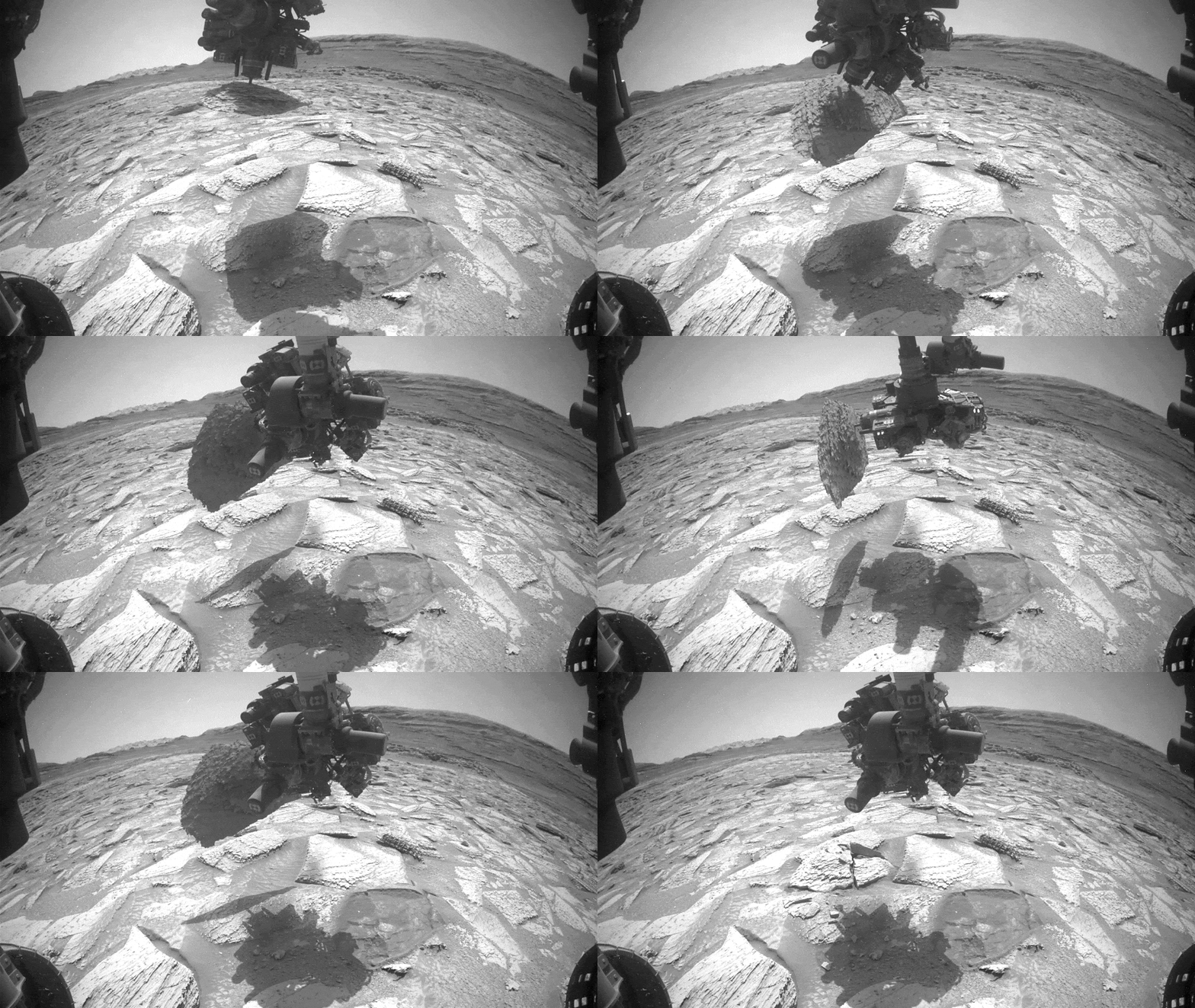
NASA engineers employed a multi-step strategy inspired by manual rock removal techniques. First, they commanded Curiosity to tilt its robotic arm in various directions, hoping gravity would help the pebble fall out. When that failed, they added rotation—turning the wrist joint to change the internal orientation. The third tactic involved vibrations: the rover's drill can be made to oscillate at specific frequencies, similar to a phone's vibration motor, to shake loose debris. The team also used the arm's percussion feature, normally used for drilling, to gently tap the stuck rock. Importantly, all commands were issued sequentially, with pauses to analyze the results. The final successful move combined a particular tilt angle with a series of vibrations, which finally dislodged the rock. Footage shows the dramatic moment when the pebble tumbles out, much to the relief of the mission team.
What does the new footage reveal about the operation?
The newly released footage, compiled from images taken by Curiosity's mast camera and arm-mounted MAHLI imager, provides a rare behind-the-scenes look at interplanetary trouble-shooting. It shows the rover's arm moving in slow, deliberate arcs—tilting left, then right, then vibrating rapidly. The visuals capture the robotic arm’s range of motion and the care taken to avoid sudden jolts. Viewers can see the shadow of the arm on the Martian soil, giving a sense of scale. The footage also documents the moment the rock finally falls, a small cascade of dust marking its exit. For engineers, the video is a valuable learning tool, revealing how material behaves in Mars' low-gravity environment. For the public, it humanizes the mission, showing that even a sophisticated robot can have a bad day—and that creative problem-solving is part of everyday life on Mars.
Why is this rock-removal effort significant for the mission?
This incident underscores the resilience and adaptability of NASA's robotic explorers. Curiosity, which landed in 2012, has already surpassed its primary mission length, and its drill has been central to over 30 sample analyses. A stuck rock could have jeopardized future sampling if it damaged the drill assembly. The successful removal demonstrates that the rover's systems are robust enough to handle unexpected obstacles without human intervention. Moreover, the techniques developed here—particularly the use of vibration sequences—may be integrated into future rover commands to prevent similar jams. The event also highlights the importance of redundancy and careful planning in space missions. For scientists eager to continue studying Mars' ancient geology, every day Curiosity spends idle is a lost opportunity. Getting the rover back to work quickly was a top priority, and the team’s success ensures the mission stays on track.
What is the role of Curiosity's drill, and how does this incident affect future plans?
Curiosity's drill is its primary tool for accessing the interior of Martian rocks. It uses a percussive-rotary action to bore into rock, collecting powdered samples that are then analyzed by onboard instruments like SAM (Sample Analysis at Mars) and CheMin. The drill's ability to work in Mars' harsh conditions has been a key success of the mission. This incident, while resolved, prompted engineers to develop new operating protocols. For example, after examining the footage, the team added extra vibration steps to the sample collection sequence to shake loose any debris before retracting the drill. They also updated the rover's software to allow for more flexible arm movements in case of future jams. For the upcoming Mars Sample Return campaign, lessons from Curiosity's close call will inform the design of sample handling systems. In short, this pebble-sized problem has yielded continent-sized improvements in planetary exploration strategy.
Related Articles
- How NASA’s Perseverance Rover Captured Its Latest Selfie—and What It Reveals About Mars’ Ancient Past
- Turning Data Chaos into Urban Clarity: An AI Breakthrough for City Planners and Emergency Teams
- 10 Key Insights into Ana Inês Inácio's Journey Shaping Wireless Technology
- 2026 Poised to Break Global Temperature Records, Warns Top Climate Scientist
- The Hidden Cost of AI Efficiency: Are We Losing Team Cohesion?
- RF Circuit Pioneer Ana Inês Inácio Wins Top IEEE Young Professional Award
- How to Uncover the Hidden 'Brakes' That Prevent Megaquakes: A Step-by-Step Guide
- Mastering Test-Time Compute: A Step-by-Step Guide to Smarter AI Reasoning