How to Leverage Mistral's New Remote Agents and Work Mode in Le Chat
Overview
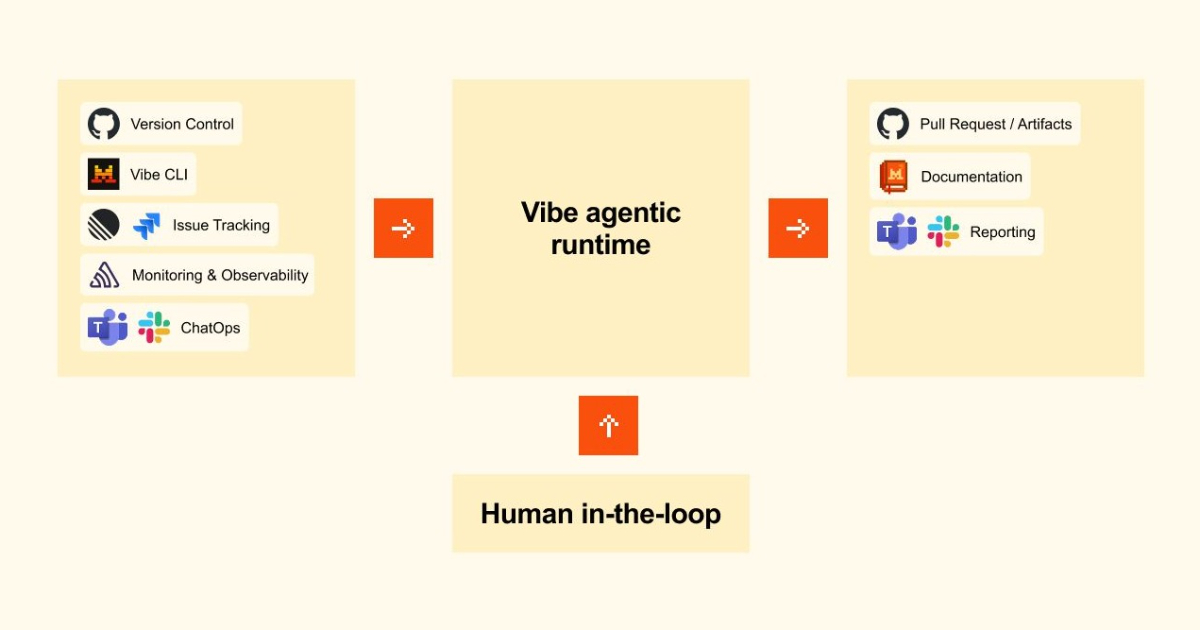
Mistral AI has recently introduced a significant update to its platform, combining a powerful new model, Mistral Medium 3.5, with enhanced cloud-based agent capabilities in its Vibe and Le Chat products. This tutorial will guide you through understanding and utilizing these new features—specifically focusing on the remote agents and work mode in Le Chat. Mistral Medium 3.5 is a 128-billion parameter model designed to excel at instruction following, complex reasoning, and code generation within a single system. By integrating cloud-based agents, you can now offload tasks to remote workers that interact with Le Chat, enabling more efficient workflows. Whether you're a developer, researcher, or power user, this guide will help you get started with these capabilities to boost your productivity.
Prerequisites
What You’ll Need
- A Mistral AI account with access to Le Chat (free tier or paid subscription as required).
- Basic familiarity with conversational AI interfaces and web-based chat tools.
- For advanced agent development: knowledge of API endpoints (optional but helpful).
- A stable internet connection to interact with cloud-based agents.
System Requirements
- Any modern web browser (Chrome, Firefox, Edge, Safari) – Le Chat runs entirely in the cloud.
- No local installation needed – the remote agents and work mode are server-side features.
Step-by-Step Instructions
1. Accessing Le Chat with Mistral Medium 3.5
First, log in to your Mistral AI account and navigate to Le Chat. The interface now defaults to using Mistral Medium 3.5 as the underlying model. You can verify this by checking the model indicator in the top-right corner. If you see “Mistral Medium 3.5” listed, you’re ready to proceed. This model handles instruction following, reasoning, and coding seamlessly.
2. Enabling Work Mode
Work mode is a new feature that optimizes Le Chat for productivity tasks. To enable it:
- Click on the settings gear icon in the lower-left corner of the chat window.
- Select “Work Mode” from the dropdown menu.
- Toggle the switch to “On”.
Once activated, work mode adjusts response formatting—prioritizing concise, actionable outputs, and enabling longer context windows for multi-step projects. You can also set custom instructions for the model to follow within work mode, such as “Always provide code snippets in Python” or “Summarize complex topics in bullet points.”
3. Deploying Remote Agents
Remote agents are cloud-based worker processes that can interact with Le Chat asynchronously. They are particularly useful for running background tasks like data analysis, code compilation, or long-running reasoning chains. To create a remote agent:
- Open the Agents panel by clicking the robot icon in the sidebar.
- Click “+ New Agent”.
- Give your agent a name (e.g., “Code Reviewer”) and description.
- Select the capabilities: Instruction Following, Reasoning, and/or Coding. (Mistral Medium 3.5 supports all three simultaneously.)
- Optionally, set a system prompt that defines the agent’s behavior.
- Choose “Private” or “Shared” based on your needs.
- Click “Create”.
Your agent will now appear in the Agents panel. You can assign tasks to it by typing “@AgentName” followed by your request in the chat. For example: “@CodeReviewer Review this Python script for errors: [paste code]”. The agent will process the request in the background and return results when ready.
4. Integrating Remote Agents with Work Mode
For maximum efficiency, combine work mode with remote agents. Here’s how:
- Ensure work mode is enabled.
- Create an agent dedicated to a specific workflow (e.g., “Data Cruncher” for data transformation).
- In the chat, type your task with the agent mention.
- While the agent works, you can continue using Le Chat for other queries—the agent operates independently.
For example, ask your agent to “Analyze this CSV and generate summary statistics.” Meanwhile, you can ask the main chat about best practices for visualization. This parallel processing is powerful for complex projects.
5. Using Mistral Medium 3.5’s Advanced Capabilities
Mistral Medium 3.5 excels at instruction following and coding. To get the most out of it:
- For reasoning: Break down complex problems step-by-step. The model benefits from clear, structured prompts.
- For coding: Specify the programming language, context, and expected output. Use code fences (```) for readability.
- For instruction following: Use concise commands. The model can handle multi-turn instructions, so you can refine as you go.
Example prompt:
/presentations/game-vr-flat-screens/en/smallimage/thumbnail-1775637585504.jpg)
Write a Python function to reverse a linked list. Include comments for each step. Use the following Node class: class Node: def __init__(self, val): self.val = val; self.next = NoneThe model will produce production-ready code with full reasoning.
6. Monitoring Agent Activity
To track your remote agents:
- Open the Agent Log from the Agents panel.
- Here you’ll see a history of tasks, statuses (pending, running, completed), and results.
- You can cancel tasks, re-run them, or modify agent settings on the fly.
This transparency helps debug issues and optimize agent performance.
7. Sharing and Collaborating with Agents
If you’re working in a team, you can share agents (either read-only or editable) by adjusting permissions in the agent settings. Shared agents appear in other team members’ Le Chat interfaces, allowing collaborative workflows.
Common Mistakes
Mistaking Agent Capabilities for the Main Model
Remember that remote agents are not separate models—they are instances of Mistral Medium 3.5 configured with specific system prompts and context. If you expect an agent to perform perfectly on tasks outside its defined scope, you may be disappointed. Always specify the agent’s purpose when creating it.
Overloading the Context Window in Work Mode
Work mode allows longer context, but if you fill it with irrelevant information, the model’s responses may degrade. Keep prompts focused. Use the agent’s system prompt to set constraints.
Ignoring Privacy Settings
When deploying agents in shared workspaces, ensure you set appropriate privacy. Private agents are visible only to you; shared agents may expose sensitive data to colleagues.
Forgetting to Enable Work Mode for Complex Tasks
If you’re working on a project that requires multiple steps (like coding a full application), work mode provides better continuity. Without it, the chat may reset context more quickly.
Not Monitoring Agent Background Tasks
Remote agents run asynchronously. If you don’t check the Agent Log, you might miss completion notices. Set up notifications if available, or periodically review the log.
Summary
Mistral’s new remote agents and work mode in Le Chat, powered by the 128-billion parameter Mistral Medium 3.5 model, bring cloud-based automation to AI interactions. By following this guide, you can configure work mode for focused productivity, create and deploy custom agents for background tasks, and harness the model’s superior instruction following, reasoning, and coding abilities. This tutorial has covered prerequisites, step-by-step deployment, common pitfalls, and best practices. Start leveraging these features today to streamline your workflows and tackle complex problems more efficiently.
Related Articles
- Two Decades of AWS S3: How a Simple Storage Service Transformed Cloud Computing
- Analyzing the AI-Native Spending Boom: A Strategic Guide for Enterprise Software Leaders
- 5 Game-Changing Insights About Azure Smart Tier for Automated Storage Optimization
- Mastering Kubelet Security: Q&A on Kubernetes v1.36 Fine-Grained Authorization
- Understanding Ingress-NGINX Quirks: What You Need Before Migration
- Microsoft Launches Smart Tier for Azure Storage: Automated Cost Optimization Now Generally Available
- Cloudflare Unveils Dynamic Workflows: Durable Execution Now Adapts to Every Tenant
- Microsoft Dominates Forrester Sovereign Cloud Wave as Digital Sovereignty Becomes Mandatory