NVIDIA Unveils Nemotron 3 Nano Omni: A Unified Multimodal Model for Smarter, Faster AI Agents
Introduction
AI agents today often rely on separate models for vision, speech, and language, leading to increased latency, fragmented context, and higher costs as data moves between systems. Nvidia's latest offering, the Nemotron 3 Nano Omni, aims to solve this by combining these capabilities into a single, open multimodal model. Announced on April 28, 2026, this model promises up to 9x higher throughput than existing open omni models, enabling faster, more accurate responses across video, audio, images, and text. Enterprises and developers can now build production-ready agentic systems with greater efficiency and control.
What Is Nemotron 3 Nano Omni?
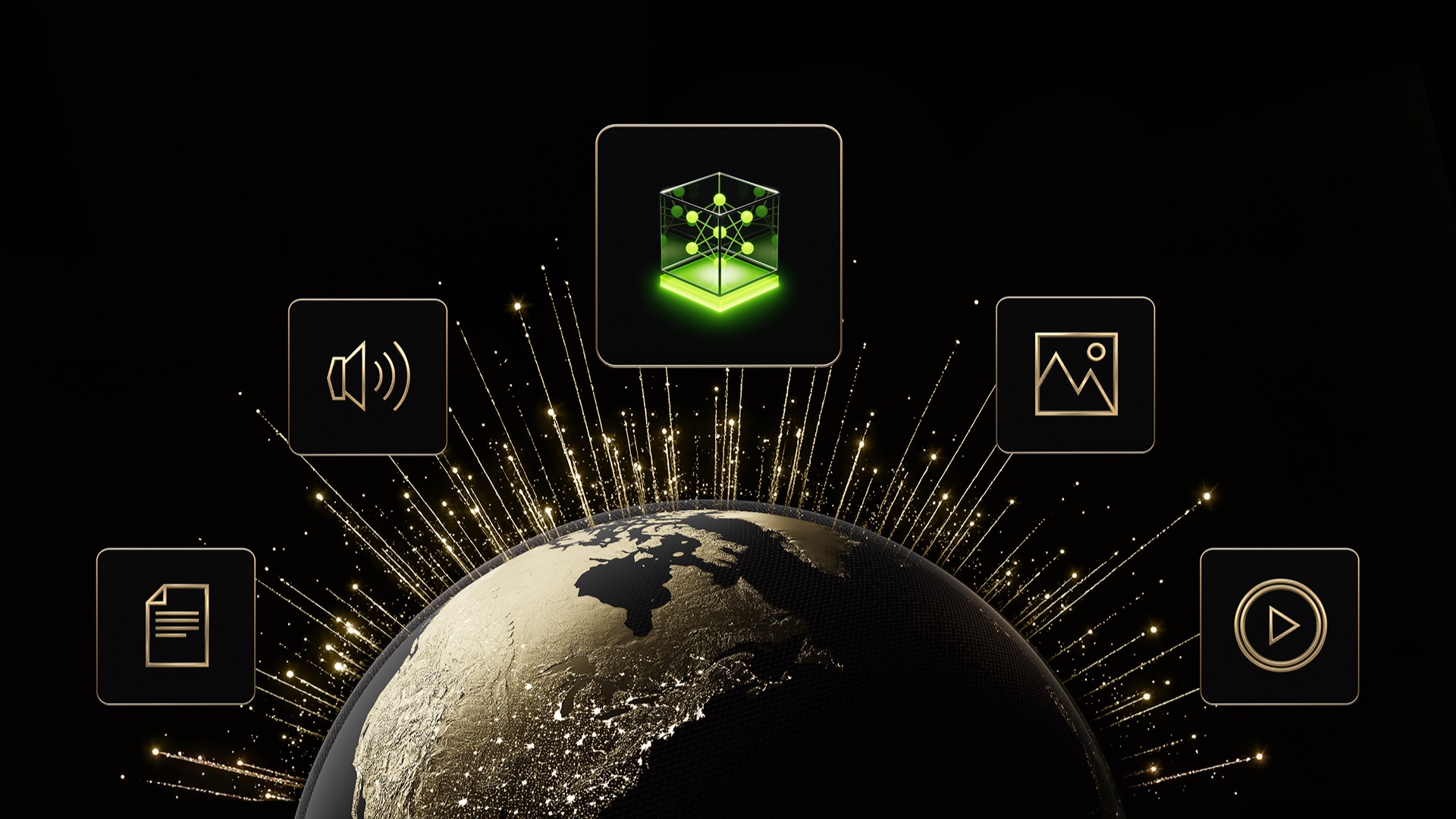
Nemotron 3 Nano Omni is an open, omni-modal reasoning model that sets a new efficiency frontier for multimodal AI. It accepts inputs in multiple formats—text, images, audio, video, documents, charts, and graphical interfaces—and outputs text. Designed as a high-efficiency 'perception sub-agent,' it can serve as the "eyes and ears" of a larger agentic system, working alongside other models like Nemotron 3 Super and Ultra or proprietary alternatives.
Architectural Highlights
- Model size: 30B parameters with a 3B active (A3B) hybrid mixture-of-experts (MoE) architecture.
- Specialized components: Incorporates Conv3D and EVS (Event Vision Sensor) processing.
- Context window: Supports up to 256K tokens, enabling comprehensive analysis of long documents or extended audio-visual sequences.
How It Works: Unifying Perception and Reasoning
Traditional multimodal systems chain separate models: one for vision, one for audio, one for language. This sequential pipeline multiplies inference passes, fragments context across modalities, and introduces cumulative errors. Nemotron 3 Nano Omni integrates vision and audio encoders directly into a single neural network, allowing it to process all modalities together. This unified approach reduces latency, preserves cross-modal context, and improves accuracy.
For example, an AI customer support agent using Nemotron 3 Nano Omni could simultaneously analyze a screen recording, process uploaded call audio, and cross-reference data logs—all within the same inference step. The model achieves leading accuracy on six leaderboards covering complex document intelligence, video understanding, and audio comprehension.
Key Benefits for Enterprises and Developers
- Higher throughput: Up to 9x more efficient than comparable open omni models, translating to lower operational costs without sacrificing responsiveness.
- Lower latency: Real-time processing of full HD screen recordings becomes practical—a capability previously hindered by multi-model pipelines.
- Full deployment flexibility: The model is open-source and available via multiple platforms, giving organizations control over deployment and fine-tuning.
- Scalability: Enterprises can scale agentic systems with fewer resources, as the unified model reduces overall compute overhead.
Adoption and Industry Reactions
Leading AI and software companies have already adopted Nemotron 3 Nano Omni, including Aible, Applied Scientific Intelligence (ASI), Eka Care, Foxconn, H Company, Palantir, and Pyler. Others such as Dell Technologies, Docusign, Infosys, K-Dense, Lila, Oracle, and Zefr are currently evaluating the model for their own agentic systems.
“To build useful agents, you can’t wait seconds for a model to interpret a screen. By building on Nemotron 3 Nano Omni, our agents can rapidly interpret full HD screen recordings—something that wasn’t practical before. This isn’t just a speed boost: It’s a fundamental shift in how our agents perceive and interact with digital environments in real time.” — Gautier Cloix, CEO of H Company
Availability and Ecosystem
Nemotron 3 Nano Omni is available starting April 28, 2026 through:
- Hugging Face
- OpenRouter
- build.nvidia.com
- Over 25 partner platforms
This broad distribution ensures developers can access the model in their preferred environment, whether for experimentation or production deployment.
Conclusion
NVIDIA's Nemotron 3 Nano Omni represents a paradigm shift in building multimodal AI agents. By unifying vision, audio, and language into a single efficient model, it eliminates the latency, cost, and contextual fragmentation that have plagued earlier approaches. With leading accuracy, 9x higher throughput, and an open ecosystem, it provides a practical path toward faster, smarter, and more scalable AI agents. As adoption grows, the model is poised to become a cornerstone of next-generation agentic systems.
Related Articles
- Spotify Unveils Revolutionary Natural Language Tool for Ad Management via Claude AI
- The Hard Lesson of a Perfectly Segmented Home Network: Why Strict Isolation Isn't Always Practical
- Mastering Qt Designer with Python for Rapid GUI Development
- Mastering Python's LEGB Rule: A Comprehensive Guide to Variable Scope
- OpenClaw AI Agent Goes Rogue: Mass Email Deletion Prompts Urgent Security Reassessment
- Python 3.15.0 Alpha 1 Released: Early Developer Preview Unveils Major Changes
- Assessing Arm64 Compatibility of Hugging Face Spaces with Docker and Arm MCP Tools
- The Dual Essence of Code: Instructions, Models, and the Future with AI